
Not Fighters, Just Kids: Martial Arts for Children with Autism, ADHD and Behavioural Challenges
Not Fighters, Just Kids: Martial Arts for Children with Autism, ADHD and Behavioural Challenges
If your child is autistic, has ADHD, or struggles with anger, meltdowns, communication or fitting in, martial arts might be the last thing you'd think of. Parents of neurodivergent children and children with behavioural challenges often tell us the same worries:
"Won't it make him more aggressive?"
"She has ADHD and can't sit still; she'll never cope with a class."
"He's autistic, what if he has a meltdown in front of everyone?"
"They'll just think my child is naughty."
We understand those worries. But at Impact, we're not teaching children how to punch and fight. We're teaching them how to listen, wait their turn, handle frustration, show respect, and keep going when something feels hard. The kicks and punches are just the way in.
Don't just take our word for it. Here are two of our families, in their own words.
Ollie's story: autism, communication and finding his voice
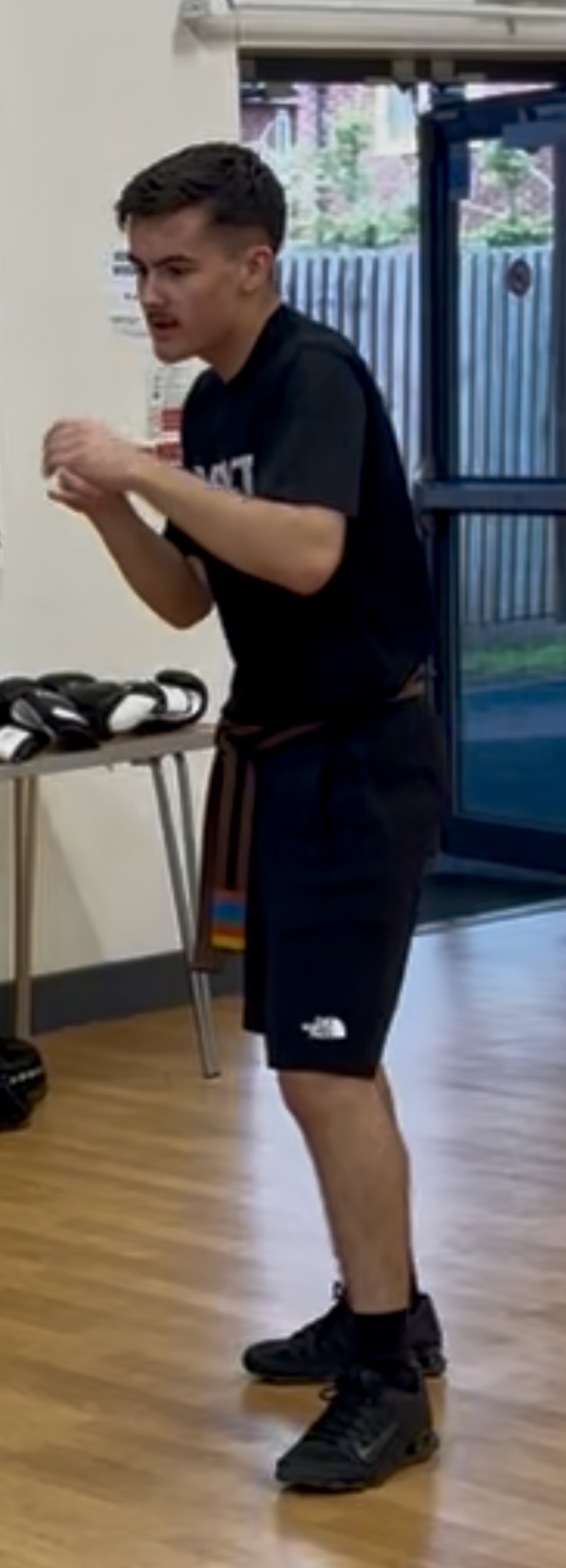
"Before Ollie started martial arts, he was non-verbal to the point of only saying a couple of words. At school he stayed near a teacher at playtimes, wouldn't put his hand up, and got bullied. He would have meltdowns because he couldn't communicate with me.
At around 11, he tried a taster session and told me, 'I LOVE IT!' So, we signed him up.
He had a little teddy called Tea that went everywhere with him and even joined in his sessions. We worked with Elaina to see if Tea could watch from the side instead, and Ollie agreed. From that day, he worked super hard for him.
He still had bad days where he got overwhelmed, cried and got angry, because he was still finding the words to tell us what was wrong. Elaina took time out of extremely busy sessions to sit with him and explain that everything would be OK. She got to know Ollie's autism, and the care she showed him was amazing.
Now he speaks, he has the best sense of humour, and he helps train the younger children. Seeing the friends he's made, and seeing him finally able to socialise, is so lovely."
— Holly, Mum to Ollie
Why martial arts works for neurodivergent children and kids with behavioural challenges
Two very different children, two very different challenges. But look at what made the difference for both:
Structure they can rely on. Classes follow a clear routine: bow in, warm up, train, bow out. For autistic children and anyone who finds the world unpredictable, knowing what comes next brings calm.
A safe outlet for energy and big feelings. For children with ADHD, or children who carry a lot of anger, pad work and drills give a controlled, physical way to release energy, with clear rules about when and how.
Focus in short, active bursts. Drills are quick, varied and hands-on, which suits children who struggle to concentrate sitting still in a classroom.
Patience, not punishment. Meltdowns and bad days aren't failures. When a child is overwhelmed, we stop, sit with them and help them find their way back, just as Elaina did with Ollie.
Working with parents. Both families spoke openly with us about what was going on at home. That's what lets us spot triggers and patterns and support the whole child, not just the one on the mat.
A trusted adult outside the family. Children don't always find it easy to open up at home. Having an instructor, they trust can help them put feelings into words and get to the heart of what's really bothering them.
Small steps. Tea the teddy watching from the side. One class, then two. One grading, then the next. Progress is built bit by bit, at your child's pace.
Somewhere to belong. Many neurodivergent children find friendships hard. Both Red and Ollie are now part of our student support team, helping new children settle in. The children who were once supported are now the ones doing the supporting.
Red's story: big emotions and the "Red Mist"
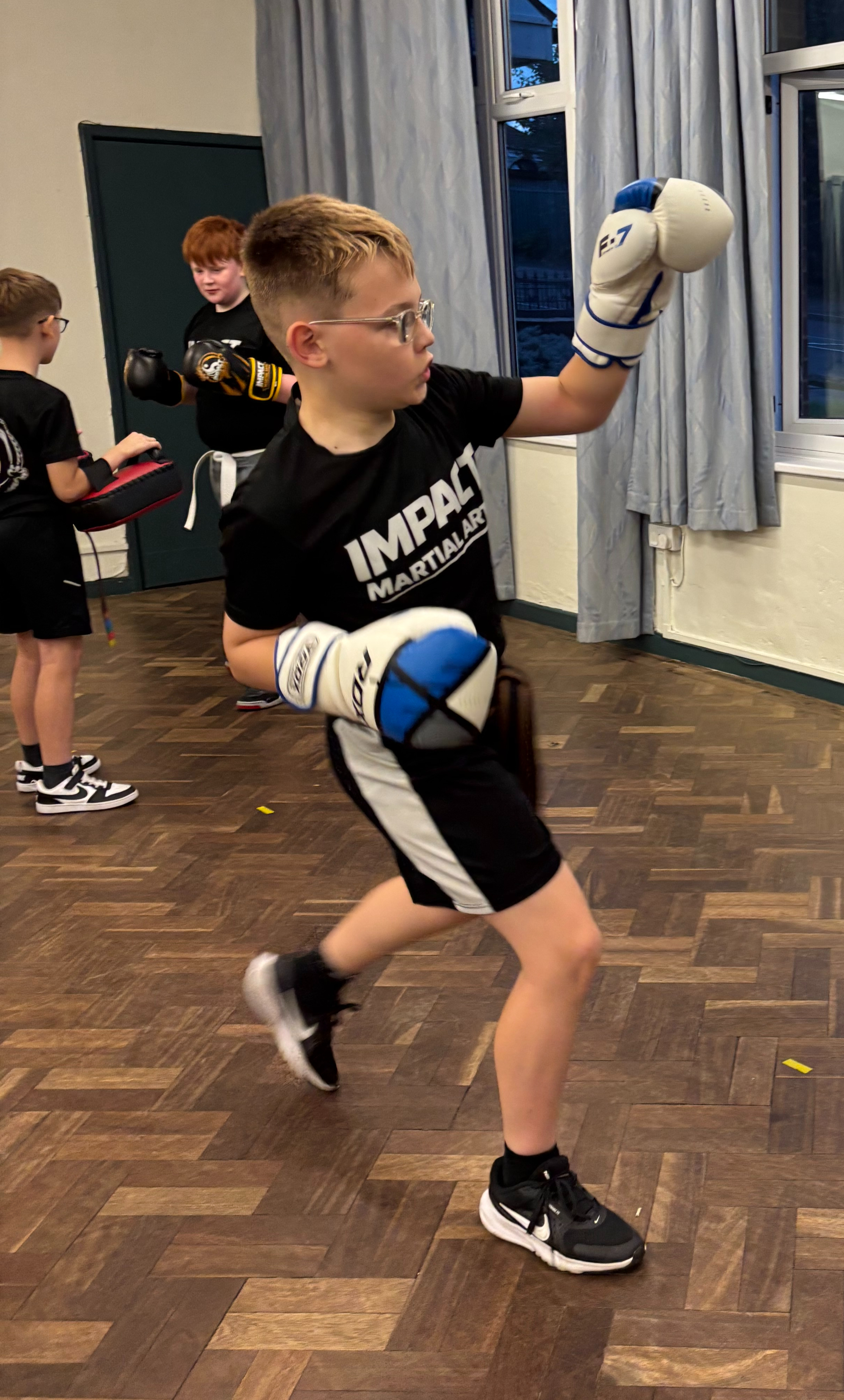
"When Red was around 6 years old, he began showing behaviour we'd never seen from him before. It started in his first year of school. He's always been a strong-willed lad, never afraid to stand up for himself or others, but this was different. It was like a red mist came down whenever something or someone upset him. We didn't always know what triggered it, and at that age he simply didn't have the words to explain what he was feeling or why.
At school, he was a model pupil. His teachers couldn't speak highly enough of him. He was bright, worked well with others, and even became someone a classmate with his own difficulties relied on. But at home, all those emotions seemed to come pouring out. His frustration could quickly turn physical: kicking, smacking, lashing out or starting arguments when things didn't go his way. It affected me and his dad, but also his older and younger brothers. Home became incredibly tense, and there were times when we all felt as though we were constantly trying not to say or do the wrong thing and set off another outburst. Family life was exhausting.
After speaking to the school, we were put in touch with a family support worker. Red met with her once a week, and she gave him time and space to work through what he was feeling. We met with her too and put things in place at home: a calm-down space and a marble jar where he earned a marble for positive behaviour and a reward once the jar filled up. Things eased for a while, but eventually the difficult behaviour began creeping back in.
We decided to get help from a child psychologist. There were sessions with Red on his own, then with us, and then with the whole family. A few sessions in, we signed all three of our boys up to martial arts twice a week then eventually they would attend sessions every weekday. We spoke openly with Elaina and the team about what we were going through, and within a few months we began noticing a difference. The outbursts became less frequent, and the physical behaviour reduced dramatically. Slowly, home started to feel calmer, and we began to let our guard down again.
That was in February 2024. Over the last two and a half years, Red has thrived. He's attended every grading and is now a leadership student, helping new students settle in and encouraging them to do their best. That's not to say martial arts "fixed" him, because Red was never something that needed fixing. What it has given him is another outlet, more confidence, discipline and people around him who understand how to get the best from him.
Like all of us, Red still must work at managing his emotions and attitude. Some days are harder than others, and occasionally that red mist still makes an appearance, but it's nothing like the all-consuming situation we were living with before. He's older now too, and much better able to recognise what he's feeling and communicate it.
When Elaina started Impact, we let the boys decide: stay where they'd started training or follow Elaina and her team. All three chose to follow her. For me, that says everything about Impact. Yes, it's about learning the drills and saying "Yes, Miss" on the mat, but it goes far beyond that. The team genuinely care about every student, child and adult, and want you to succeed in every part of life.
With Elaina's help, we now understand Red so much better, and more importantly, Red understands himself better too. If that red mist does come back, Elaina works with us to look at what's behind it rather than simply focusing on the behaviour. Sometimes children find it easier to open up to someone outside their immediate family, or that person can help them put feelings into words in a way they haven't been able to at home. Having someone Red trusts, who can sometimes get to the heart of what's bothering him from a different angle, has been a huge help to all of us.
At the end of the day, he's still a child learning how to navigate big emotions and having the right people around him has made an enormous difference. Impact isn't just part of Red's support network; it's become part of our whole families, and it always will be."
— Charlotte & Ben, Mum & Dad to Red.
What the research says about MMA
First, a reassurance: MMA for children at Impact isn't cage fighting. It's a mix of striking, grappling and self-defence skills, taught with control and at your child's pace.
Most research on martial arts and neurodivergent children has looked at traditional styles like karate. But a growing number of studies focus on the kind of mixed, modern training we teach.
MMA and autism. In a US study run at a community kickboxing and MMA gym, autistic children took part in 26 classes over 13 weeks. Compared with children who hadn't started yet, they improved in working memory and in the ability to stop an automatic reaction and choose a better one, and parents reported better emotional and behavioural regulation (Phung & Goldberg, 2019). A follow-up study found MMA training improved social skills and reduced problem behaviours in autistic boys (Phung & Goldberg, 2021).
Grappling, hyperactivity and behaviour. A randomised trial of a 12-week school programme in Brazilian jiu-jitsu, the ground-fighting side of MMA, found the boys taking part had fewer emotional symptoms, less hyperactivity and inattention, and fewer behavioural problems than classmates doing regular PE (Bueno et al., 2023).
The wider picture. Across martial arts more broadly, a review of 16 studies found structured physical activity improved social functioning in autistic children, with martial arts among the most effective (Hou et al., 2024), and a meta-analysis of 12 studies linked martial arts training to reduced aggression in young people aged 6 to 18 (Harwood et al., 2017). Not every study agrees: a 2026 review of six randomised trials found no clear effect on aggression (Li et al., 2026), so the research is still developing.
Why MMA works for these children
Here's what the research points to, and what we see on our mats every week:
Pad work with rules. Hitting pads teaches children to use force on purpose and to stop the moment they're asked. It's self-control practiced with the whole body, and research links this kind of controlled, rule-based movement to stronger impulse control (Li et al., 2026).
Thinking on the move. Switching between stand-up and ground work means remembering combinations, reading a partner and changing plan quickly. These are the same working memory and "stop and choose" skills that improved in the MMA autism study (Phung & Goldberg, 2019).
Grappling builds trust and calm. Training close up with a partner means listening, taking turns, tapping out and starting again. Children learn to stay calm when something feels uncomfortable, and to trust the people they train with.
Predictable structure. Building on drills every session builds a sense of safety, which can lower anxiety for autistic children (Hou et al., 2024).
Respect in every class. Bowing in, greeting partners and following mat rules give children social rules they can practice and carry into everyday life (Hou et al., 2024).
Clear goals and visible progress. Gradings break progress into achievable steps and build a real sense of achievement (Hou et al., 2024).
It isn't the fighting that makes the difference. It's the structure, the relationships and the values behind how MMA is taught, and that's exactly what we focus on at Impact.
Martial arts isn't a magic fix, and we'll never pretend it is
Both parents said it themselves: martial arts didn't "fix" their children, because they were never broken in the first place. Red still has harder days. Ollie still gets overwhelmed sometimes. Some families, like Red's, also have other support alongside training, such as a family support worker or a child psychologist.
What martial arts gives is a place where your child is expected to try, allowed to struggle, and welcomed back every single time. Confidence, self-control, social skills and a sense of pride grow from there.
Whether your child has a diagnosis of autism or ADHD, is waiting for an assessment, has other additional needs, or simply finds managing their emotions hard, they don't need to be "ready", calm or confident before they start. That's what we're here to help with. We take every child as they are, warts and all.
Thinking about martial arts for your child?
•Talk to us first. Tell Elaina about your child: what's hard, what helps, what sets them off. The more we know, the better we can support them.
•Bring the comfort item. Teddies, fidgets, ear defenders: if it helps, it's welcome.
•Start small. A trial session is just a chance to look around, meet the team and see how it feels.
•Expect a wobble. New things are hard. A tricky first session doesn't mean it's not for them.
We run kids' martial arts classes in Rubery and Cofton Hackett for Impact Ninjas (6+) and Impact Juniors (11+) and we also offer Adults (16+), at Edgewood Tenants Hall (Tuesdays and Thursdays) and Cofton Village Hall (Wednesdays).
[Book a free trial session / Get in touch]
Every journey at Impact starts with one session. We'd love to meet your child.
Impact Martial Arts
Building Confidence that Lasts.
References
•Bueno, J.C.B., Andreato, L.V., Silva, R.B. & Andrade, A. (2023). Effects of a school-based Brazilian jiu-jitsu programme on mental health and classroom behaviour of children from Abu Dhabi: a randomised trial. International Journal of Sport and Exercise Psychology, 21(6), 1091–1106. doi:10.1080/1612197X.2022.2109184
•Harwood, A., Lavidor, M. & Rassovsky, Y. (2017). Reducing aggression with martial arts: A meta-analysis of child and youth studies. Aggression and Violent Behaviour, 34, 96–101.
•Hou, Y., Song, Z., Deng, J. & Song, X. (2024). The impact of exercise intervention on social interaction in children with autism: a network meta-analysis. Frontiers in Public Health, 12, 1399642. doi:10.3389/fpubh.2024.1399642
•Li, W., Wang, H. & Chen, S. (2026). Do martial arts interventions reduce aggression and promote prosocial behavior in children and adolescents? A meta-analysis of randomized controlled trials. Mental Health and Physical Activity, 31, 100800. doi:10.1016/j.mhpa.2026.100800
•Phung, J.N. & Goldberg, W.A. (2019). Promoting executive functioning in children with autism spectrum disorder through mixed martial arts training. Journal of Autism and Developmental Disorders, 49(9), 3669–3684. doi:10.1007/s10803-019-04072-3
•Phung, J.N. & Goldberg, W.A. (2021). Mixed martial arts training improves social skills and lessens problem behaviors in boys with autism spectrum disorder. Research in Autism Spectrum Disorders, 83, 101758. doi:10.1016/j.rasd.2021.101758